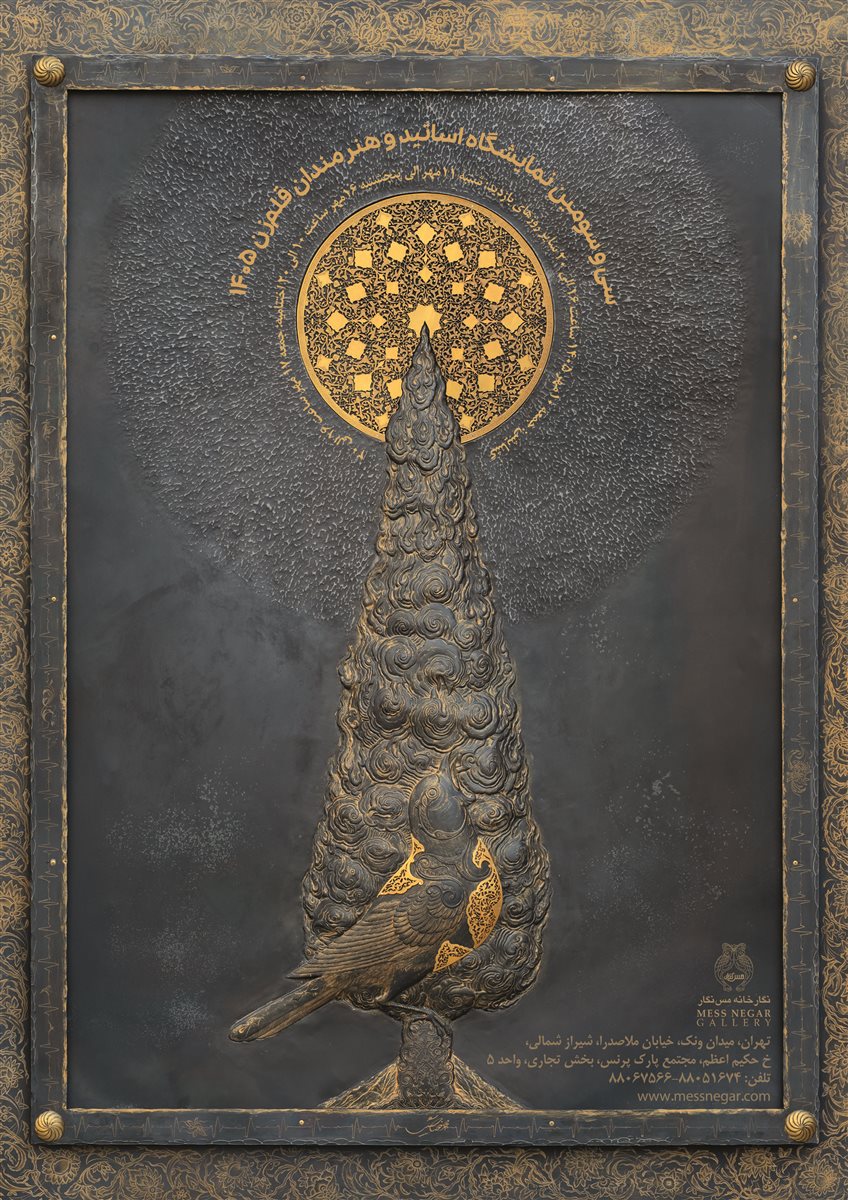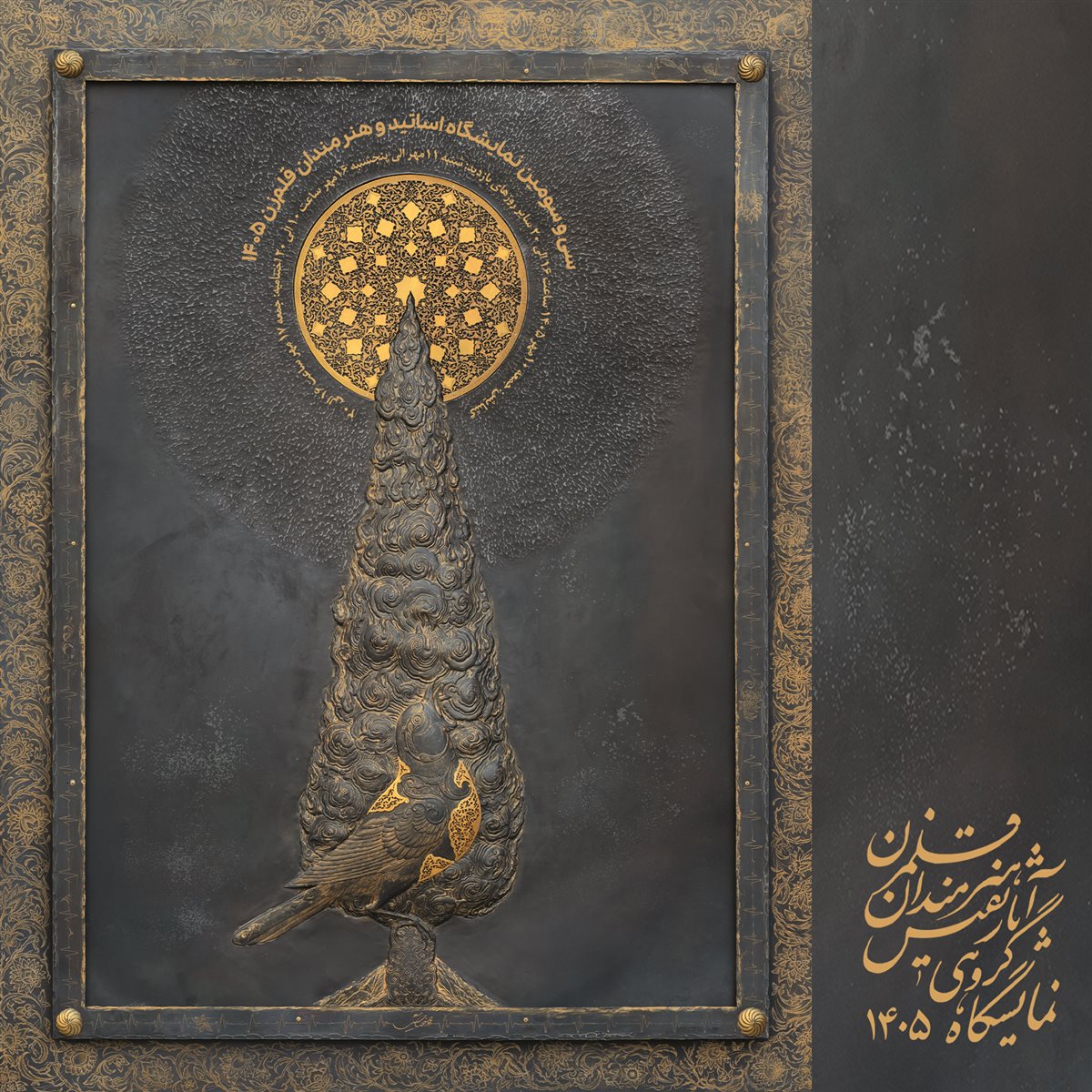
Engraving Artists 33st Annual Exhibition
Solo Exhibition
In recent years, Iranian engraving has witnessed the emergence of a generation of artists who, alongside their mastery of craft and technique, regard the artwork as a space for thought, experimentation, expression, and storytelling. In their work, metal is no longer merely a surface for reproducing familiar motifs and patterns; it becomes a medium through which ideas, images, and meanings take shape, recording the artist’s narrative of both the world around them and their inner world.
In the past, motifs and ornamentation were often the subject and ultimate purpose of the work, with its value shaped above all by the delicacy of execution and the artist’s skill in reproducing traditional designs. In contemporary engraving, these elements remain present, but rather than serving solely to ornament the surface, they have become components of a visual language—a language through which the artist constructs meaning, tells stories, and shares their personal experience and perspective with the viewer.
Rooted in the long-standing tradition of engraving and the heritage of Iranian art, these works do not stop at reproducing the past. The artist rereads this heritage through the lens of lived experience and a contemporary perspective, discovering within the same material, tools, and techniques new possibilities for expression, meaning-making, and storytelling. For the continuity of a tradition lies not in repeating its established forms, but in its capacity to transform, engage in dialogue with its own time, and discover the language and aesthetics of each era. It is through this process that engraving has moved closer than ever to the realm of contemporary visual art, without severing its connection to tradition.
Engraving today stands precisely at such a point: between memory and possibility, between what has been inherited from the past and what may yet emerge. Preserving this heritage does not simply mean safeguarding the motifs, techniques, and principles of earlier generations; it also means creating space for experimentation, discovery, meaning-making, and the addition of new narratives to its history.
The 33rd Exhibition of Masters and Engraving Artists at MessNegar Gallery is a reflection of this journey. Here, the works of two generations of artists are brought together, creating a dialogue between experience and exploration, skill and thought, tradition and the contemporary gaze. It presents a portrait of a living art that knows its roots but is not confined by them; an art in which motif moves beyond ornamentation to become a language, generating meaning and creating narratives. An art that, through its dialogue with the present, contributes to shaping a part of the heritage of tomorrow.
MessNegar Gallery
October 2026
Gallery